

A lot of people are frustrated with Ryan Poles. The new Chicago Bears GM has so many roster holes to fill and yet has remained shockingly quiet over the first week of free agency. Every signing he has made up to this point can't be called significant. It is more a series of bargain moves with some upside. Names like Byron Pringle, Nicholas Morrow, and Justin Jones. Considering how much help Justin Fields needs, one would think Poles might have a greater sense of urgency.
Yet it's becoming apparent the 36-year old will not be rushed into any rash decisions. He refuses to overspend for players on the veteran market. The only significant contract he handed out was to Larry Ogunjobi, which fell apart due to a failed physical. Nobody can understand what Poles is trying to accomplish with 50 roster spots still to fill. There is no simple answer to this so early in the offseason, but one thing is becoming apparent.
He is prioritizing the offensive line.
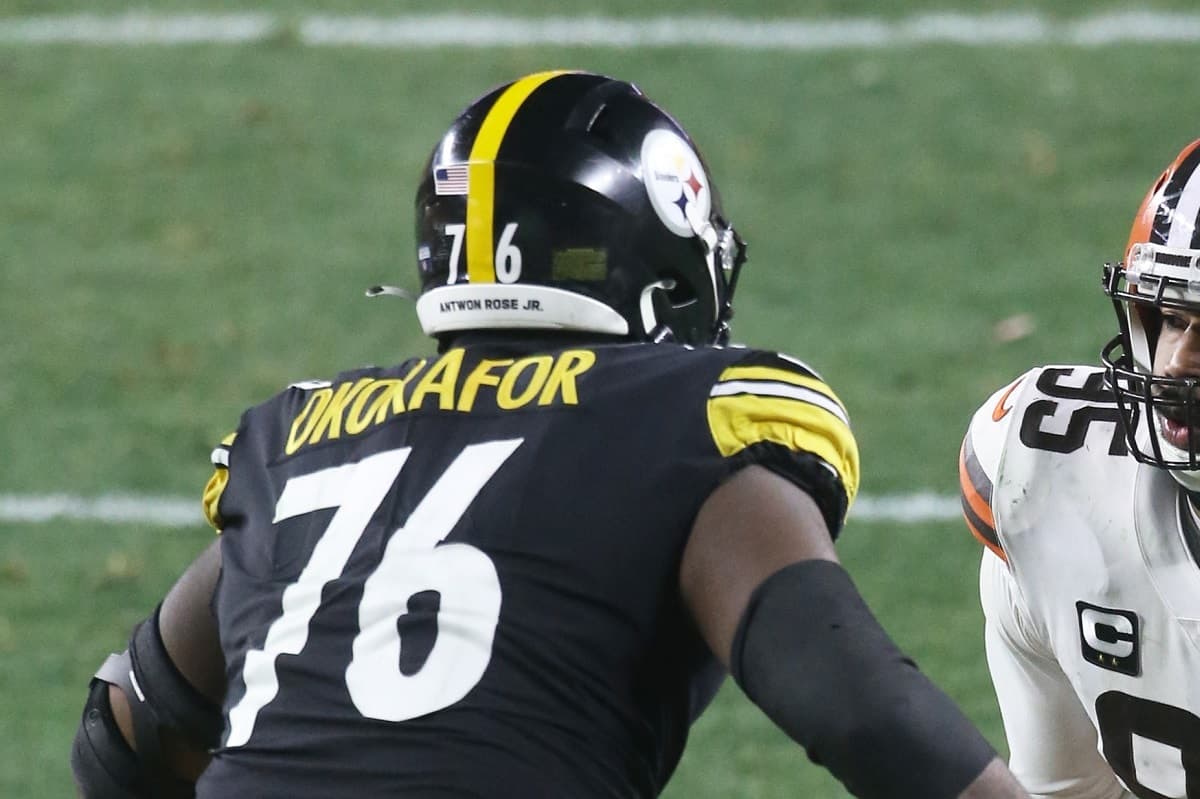
Already the Bears have signed their new starting center in Lucas Patrick, fresh off a solid year in Green Bay. Recent reports say they're hoping to sign restricted free agent guard Ryan Bates from Buffalo. Their meeting with him remains ongoing. According to Jeremy Fowler of ESPN, Poles had eyes for another prominent free agent this past week. Unfortunately, the price tag proved too steep."Overall, Chicago took a prudent approach to Ryan Poles' first free agency as the Bears' GM. The team identified several players as great fits but not worth a bidding war. One example was right tackle Chukwuma Okorafor. He could have been a Bear, but not at three years and $29.25 million, which Pittsburgh was willing to pay to re-sign him."Okorafor was a 3rd round pick for the Steelers back in 2018. It took some time but he eventually developed into their starting right tackle. Last season was easily his best to date, allowing just 23 pressures on the quarterback in 720 pass-blocking snaps. His size, mobility, and nastiness checked the boxes Poles and his new regime covet in offensive linemen. In the end, paying him $10 million+ per year felt like too much of a risk.