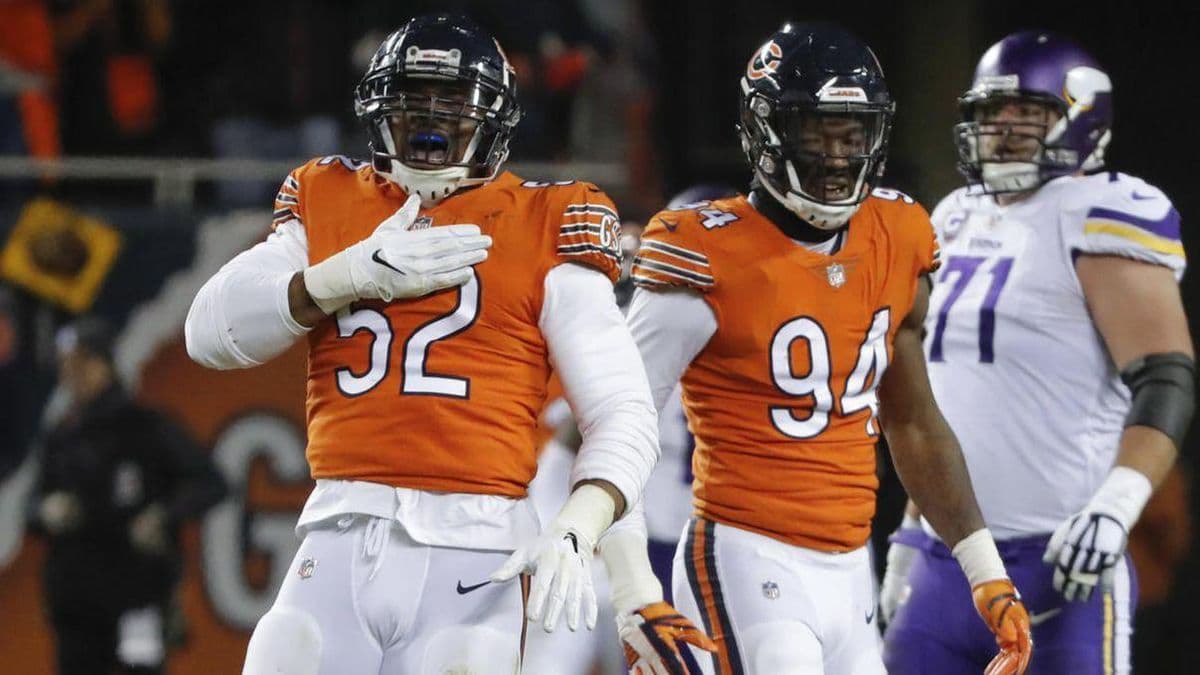
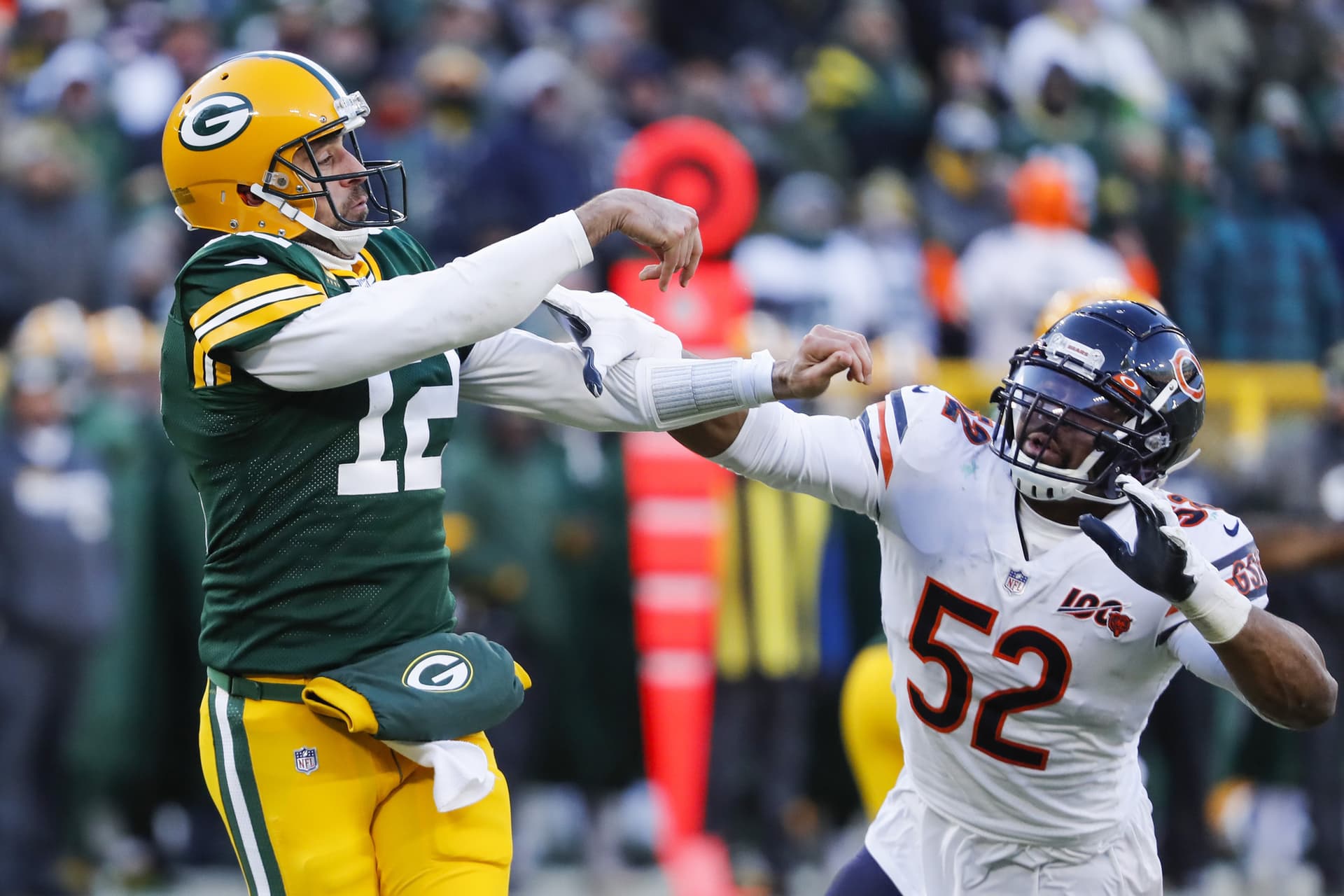
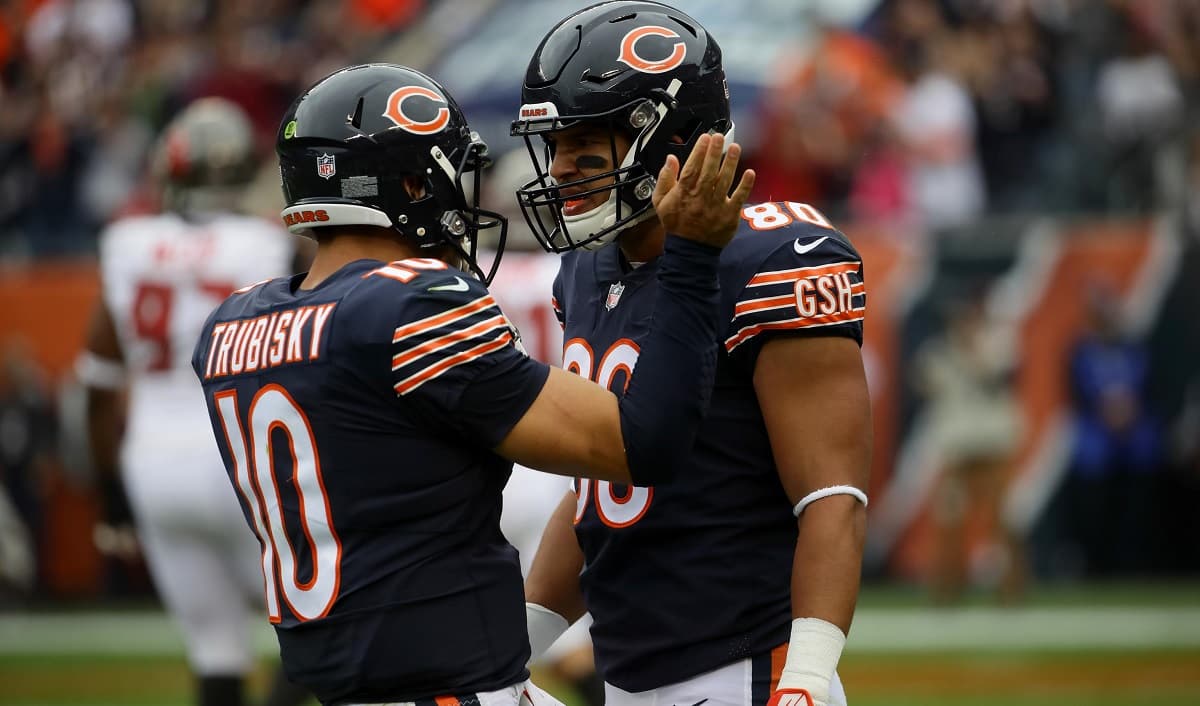

They say you're only as good as your dancing partner. When it comes to rushing the passer in the NFL, this is so true. Look back on the greatest pass rushers in league history and they almost always had a guy capable of drawing attention from opposing offenses. Bruce Smith had Phil Hansen. Reggie White had Clyde Simmons. Kevin Greene had Greg Lloyd. The list goes on. Khalil Mack is another of those generational talents who will end up in the Hall of Fame. Unfortunately, Leonard Floyd has proven to not be the dancing partner he needs to excel.
Thus far in his career, Mack has played across from four different primary pass rushers dating back to 2014 in Oakland. In that time, it's become apparent that Floyd is the least capable of taking advantage of his presence than any other. Just look at the list below for an idea.
- 2014 - Justin Tuck (5 sacks)
- 2015 - Aldon Smith (3.5 sacks in 9 games)
- 2016 - Bruce Irvin (7 sacks)
- 2017 - Bruce Irvin (8 sacks)
- 2018 - Leonard Floyd (4 sacks)
- 2019 - Leonard Floyd (3 sacks)
Think about this. Irvin had more sacks in 2017 alone than Floyd has managed in nearly two. That is hard to comprehend. Chicago Bears coaches have continued to defend the 27-year old for his capability against the run and in coverage. This is true to an extent, but then that's not what Floyd was drafted for. It's also not what he's getting paid millions of dollars for either. His main job is to get the quarterback and he isn't doing it.
Leonard Floyd isn't worth the money he's about to earn
The Bears picked up Floyd's 5th year option this year and they had good reasons to do so. He finished 2018 strong and appeared poised for a breakout. It would enable them to maintain control for an extra year to see if this was true. As most have seen, it was not. Floyd is set to earn $13.22 million on the option in 2020. For a little context, that is more than Preston Smith made this year with Green Bay. Smith has 11.5 sacks with two games left to play.
Obviously the Bears wouldn't be making the smartest business decision to actually pay him that money next year. So they have one of two choices. They can look to negotiate a long-term contract with him. One that lowers the overall salary to something closer to his actual production level. Or they look to cut or trade him elsewhere, removing the cap hit entirely. Truth be told, the smart play would be going out to find somebody who can actually take advantage of what Mack brings to the table.