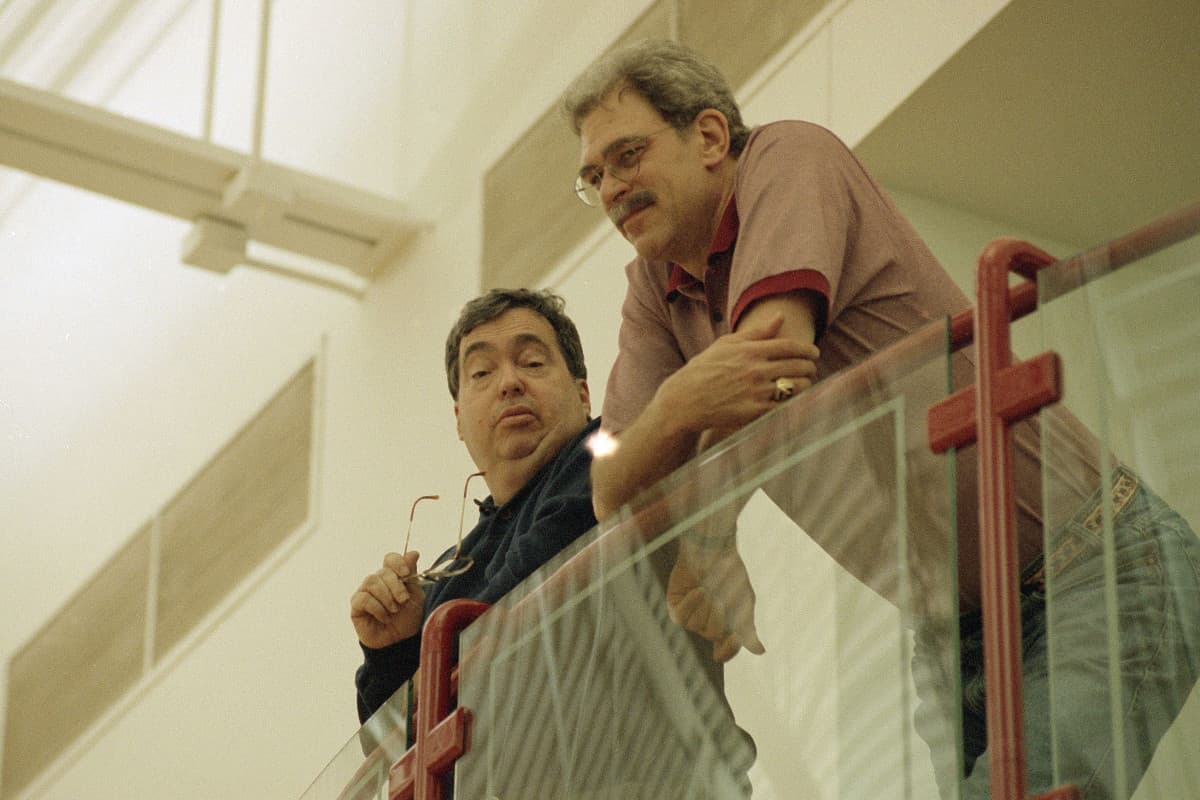
With the highly anticipated "The Last Dance" documentary set to air Sunday night detailing the final season of the 90s Chicago Bulls championship team, many are waiting to see what will be said. It is known that the six-time world champion Bulls were broken up not due to a fade in talent, but because of a disagreement between players and upper-management. Former Bulls general manager Jerry Krause is often depicted as the villain in the breakup of the dynasty but doesn't get enough credit for the bravery for conducting such a drastic measure.
In June of 1998, the Chicago Bulls had won their sixth NBA title in eight seasons. Moments after Michael Jordan's game-winning shot in game 6 of the NBA Finals, the first questions weren't about the game itself, but if the team was going to be broken up. The organization knew that it would be the last championship with the team due to a litany of reasons. Krause's front office was ready to move on from the team. Many believed that it was due to resentment towards the players and head coach Phil Jackson, but few knew that it was from a talent perspective also.
Before Krause's death in March of 2017, he was interviewed by NBA insider Adrian Wojnarowski apart of The Vertical Podcast. In the podcast, the former general manager highlighted what went into the decision to begin the teardown of the team. Krause stated that the key decision from a talent standpoint was the health concerns for forward Dennis Rodman and center Luc Longley. The biggest fear was not having a rebounding presence on the team if Rodman and Longley were not able to remain healthy.
Furthermore, the rest of the team was getting up in age, as the team's best two players in Jordan and Scottie Pippen were over the age of 32. Pippen had failed to play in more than 50 games in each of his final two seasons with the Bulls. To make matters more complicated, the Hall of Fame small forward wanted a large contract extension from the team. With age and the lack of rebounding going forward, Krause and his staff believed that the team would struggle to win championships going forward.
Looking back at the seasons immediately following the 1997-98 NBA season, Krause appeared to be right as the teams the Bulls would have possibly faced in the 1999 and 2000 seasons were especially talented. Although the lockout shorten-season in 1999 would have benefited the team's health, they would have had to face the New York Knicks and Indiana Pacers in the playoffs. The Pacers had forced the Bulls to a game 7 in the 1998 Eastern Conference Finals and made it to the NBA Finals in 2000.
Both Rodman and Longley would be out of the league within three seasons. Chicago would have had a hard time with no draft capital and a limited salary cap to replace the pair. The Bulls still would have been a playoff team but would have had a much more difficult time defending their title.
Had the Bulls made it to the NBA Finals in 1999 and 2000, they would have gone up against the San Antonio Spurs and Los Angeles Lakers. The 1999 Spurs featured one of the best rebounding dynamic duos in MVPs Tim Duncan and David Robinson. In 2000, Jordan and company would have had to face the Los Angeles Lakers, who became the dynasty of the 2000s with Hall of Famers Kobe Bryant and Shaquille O'Neal. Both teams won multiple championships with their respective duos.
For years Krause had been trying to add young talent to the dynasty to extend it for as long as possible. Given the lack of resources to bring on young talent, Chicago's best move was to trade Pippen to acquire multiple high-end, first-round draft picks. Krause and management, although they had legitimate deals in place, could not pull the trigger as Jordan threatened retirement had they traded Pippen.
Following the 1998 season, the team moved on from Jackson as their head coach, initiated a sign and trade for Pippen sending him to Houston, and all but forced Jordan into retirement. Where any other basketball executive would have never entertained the idea of completely tearing down and rebuilding one of the best teams in NBA history, Krause embraced the undertaking.
The Bulls at the time were a marketing juggernaut and had global recognition. Global popularity for sports teams was near impossible to achieve before the advent of social media. Krause went to team owner Jerry Reinsdorf and convinced him to break up the team at its peak to start all over. A majority of general managers would not have the courage to break up a sure thing, let alone convince an owner to give up on so much revenue and marketing.
Krause did just that knowing that he, along with the rest of the team's front office, would be hated by both the media and fans. It was a no-win situation for the embattled general manager because had they kept the team intact, Krause would have been placed with the blame if and when the team began to decline.
Krause somewhat also did the team a favor by preserving their legacy as one of the best teams in NBA history. The 90s Bulls went out on top and never had to undergo the decline that the "Showtime" Los Angeles Lakers or "Bad Boys" Detroit Pistons went through. Image the heartbreaking scene for Bulls fans watching Jordan, Pippen, and Jackson walking off the court after being eliminated by Reggie Miller, Allen Iverson, or Bryant. The legacy and allure still stand today because no team can claim that they brought the 90s Bulls dynasty to an end.
The breaking up of the team was one of the worst moments in all of Chicago sports history. In 1999, the Bulls would be the worst team in the NBA winning just 13 of 50 games and set numerous records in futility. Krause began his rebuild with the goal of proving that he could build a winner again. He was also motivated to show that it just wasn't Jordan and the players that were solely responsible for the dominant success Chicago had witnessed. To initiate a teardown in the way that it was conducted is a remarkable feat, something Krause never received credit for.